


How to Source Structural Steel Profiles from Turkey: A Buyer’s Guide
Finding a reliable supplier for structural steel profiles is one of the most time-consuming parts of any procurement cycle. Specifications vary, lead times are unpredictable, and the cost difference between sourcing from the right country versus the wrong one can be significant. Turkey has become one of the leading exporters of structural steel profiles — and for good reason.
This guide covers everything a procurement manager or engineering buyer needs to know before placing an order: profile types, material grades, quality standards, and what separates a dependable Turkish supplier from a poor one.
What Are Structural Steel Profiles?
Structural steel profiles are hot-rolled or cold-formed sections used as load-bearing elements in construction, industrial structures, machinery frames, and infrastructure projects. The most commonly sourced types include:
- IPE profiles — European standard I-beams with parallel flanges; widely used in steel-frame buildings and bridges
- HEA profiles — Wide-flange H-beams (light series); preferred for columns and heavy structural applications
- HEB profiles — Wide-flange H-beams (medium series); stronger than HEA for the same height, common in construction and industrial frameworks
- HEM profiles — Heavy-duty wide-flange beams for maximum load demands
- UNP / UPE channels — U-shaped sections for purlins, framing, and support structures
- L-profiles (angles) — Equal and unequal leg angles for bracing, brackets, and connecting elements
- T-profiles and flat bars — Used in fabrication and secondary structural roles
Each profile type is defined by its cross-sectional dimensions (height, flange width, web thickness) and produced in a range of sizes to match structural load requirements.
Why Source Structural Steel Profiles from Turkey?
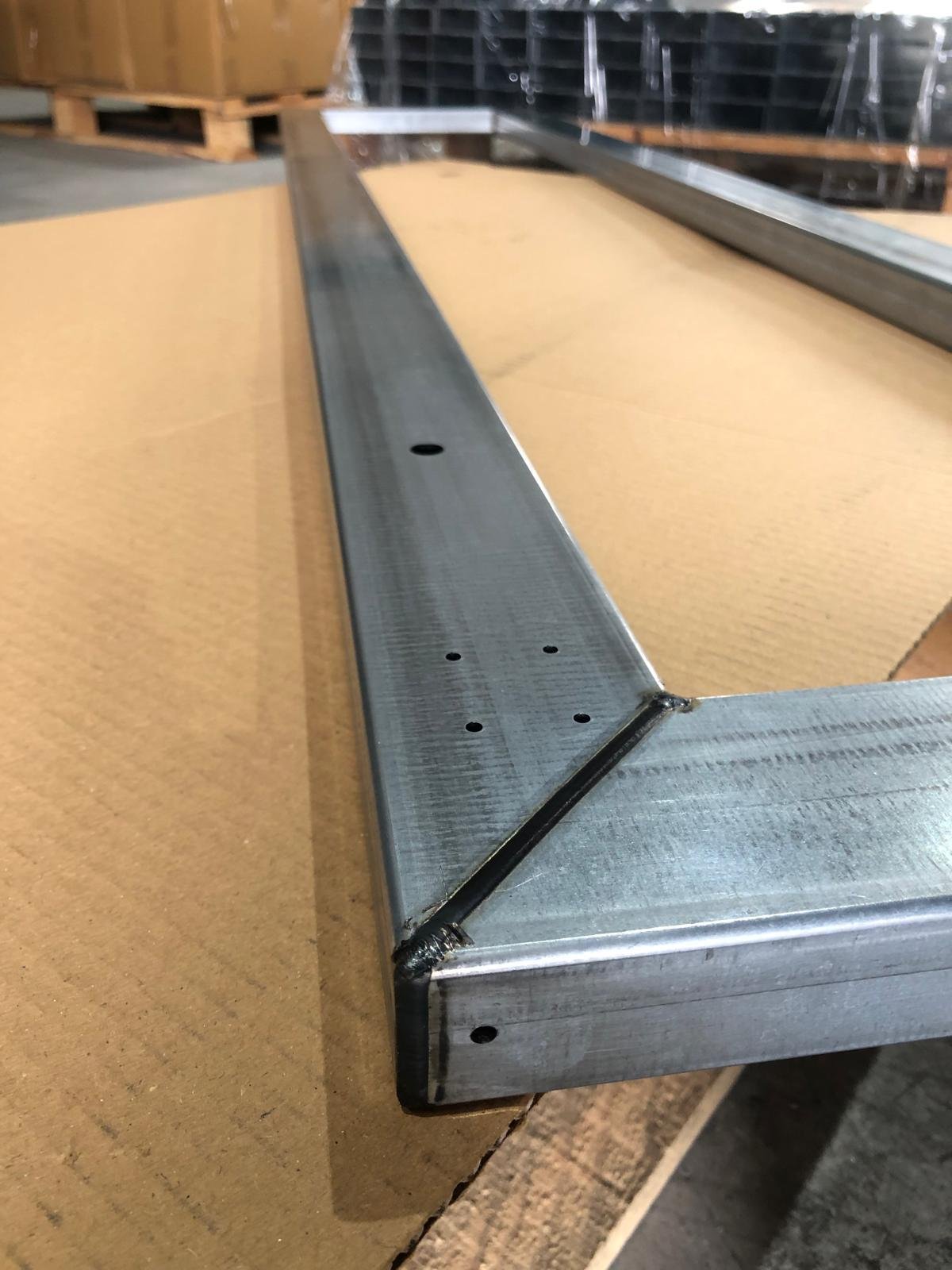
Turkey ranks among the world’s top ten steel-producing nations, with an integrated production infrastructure that covers everything from raw material processing to finished rolled sections. Several factors make Turkey a competitive sourcing destination:
- Direct manufacturer access. Turkish mills produce structural profiles in-house, which eliminates the intermediary markups common when sourcing through trading hubs in Western Europe.
- Competitive pricing. Steel production costs in Turkey — driven by efficient electric arc furnace capacity and domestic scrap availability — consistently allow Turkish suppliers to offer prices below equivalent European producers.
- European standards compliance. Turkish steel manufacturers produce to EN 10025 and comparable standards, with mill test certificates issued as standard practice. Most major exporters hold ISO 9001 certification.
- Flexible order quantities. Unlike some large mills that require minimum orders above 100 tonnes, many Turkish suppliers can accommodate smaller consignments — useful for engineering firms, distributors, and project-based buyers.
- Geographic proximity to Europe and the Middle East. Turkey’s location keeps transit times short for European buyers (3–7 days by road or short sea) and allows cost-effective shipping to Gulf and North African markets.
Key Material Grades and Standards
When specifying structural steel profiles from Turkey, buyers should align their requirements with European and international standards that Turkish mills routinely certify against:
- S235JR / S235J0 / S235J2 — General structural steel; used in light-duty applications, secondary structures, and non-critical fabrication
- S275JR / S275J2 — Medium-strength structural steel; common in building frames, bridge components, and crane girders
- S355JR / S355J2 / S355J0 — High-strength structural steel; standard specification for most load-bearing structural applications
- S420 / S460 — Higher-yield grades for demanding engineering applications where weight reduction is a priority
All grades are produced under EN 10025 (hot-rolled products of structural steel). Mill test certificates should include chemical composition, mechanical properties (yield strength, tensile strength, elongation, impact energy at specified temperature), and heat number traceability.
How to Evaluate a Turkish Steel Profile Supplier
Not every supplier quoting Turkish steel actually has direct manufacturer relationships. Here are the four areas that separate reliable exporters from risky ones:
1. Mill Certificate Transparency
A legitimate supplier will provide original mill test certificates — not just quote to a grade. Ask for a sample MTC from a previous shipment before placing an order. Verify that the heat numbers, dimensions, and chemical analysis match what was shipped.
2. Dimensional Tolerances
Structural profiles should comply with EN 10034 (I and H sections) or EN 10056 (angles). Ask suppliers to confirm which tolerance class they ship to. Tight-tolerance applications — crane rails, precision-fabricated frames — require explicit confirmation.
3. Minimum Order Quantities and Lead Times
MOQs for ex-mill orders typically start from 20–25 tonnes per profile section. Stock suppliers can move smaller quantities faster, but pricing reflects the premium. Clarify lead times for both in-stock and mill-order scenarios before committing to project timelines.
4. Logistics and Incoterms Coverage
Confirm whether the supplier works on FOB (Mersin, İskenderun, Ambarlı) or can arrange CIF delivery to your port. Some exporters offer door-to-port logistics coordination, which simplifies the import process for buyers new to Turkish sourcing.
Common Applications by Sector
Structural steel profiles sourced from Turkey serve a wide range of end-use industries:
- Construction and civil engineering — Steel-frame buildings, industrial warehouses, halls, and bridges
- Energy and utilities — Substation frames, solar mounting structures, pipeline supports
- Machinery and industrial equipment — Machine bases, conveyor frames, equipment supports
- Shipbuilding and offshore — Hull framing, deck supports, structural reinforcements
- Mining and heavy industry — Structural supports, overhead crane systems, processing plant frames
- HVAC and MEP — Ducting support structures, equipment platforms, pipe racks
How Steeling.net Connects Buyers with Turkish Steel Profile Suppliers
Steeling.net is the joint export company of select Turkish steel manufacturers. We represent our manufacturing partners directly in international markets — providing buyers with a single point of contact for sourcing IPE, HEA, HEB, and other structural profiles, without the usual intermediary layers.
What this means in practice for procurement teams:
- No commission or access fee — our service to buyers is free of charge
- Direct manufacturer pricing, not trader margins
- Full mill certificates and test reports as standard
- Quote turnaround within hours for standard specifications
- Coordination of logistics, documentation, and export formalities
Whether you need a recurring supply of S355 HEA beams for a construction programme or a one-off consignment of IPE 300 for a machinery project, our team can prepare a tailored supply proposal based on your exact requirements.
Frequently Asked Questions
What is the minimum order quantity for structural steel profiles from Turkey?
For ex-mill orders, minimum quantities typically start at 20–25 tonnes per section. For mixed consignments combining several profile sizes, total order weight of 30–40 tonnes is usually the practical minimum to keep freight costs competitive. Smaller quantities may be available from stock at adjusted pricing.
What grades of structural steel are available from Turkish manufacturers?
Turkish mills routinely produce S235, S275, and S355 grades to EN 10025. Higher-yield grades (S420, S460) are available from select producers. All shipments come with original mill test certificates documenting chemical and mechanical properties.
How long does shipping from Turkey to Europe take?
Shipping times vary by destination and mode. Road transport to Central Europe (Germany, Poland, Czech Republic) takes approximately 4–7 days. Short sea shipping to Adriatic or North Sea ports ranges from 7–14 days depending on the route and vessel schedule.
Do Turkish steel suppliers comply with EN standards?
Yes. Major Turkish structural steel producers certify their products to EN 10025 and EN 10034 (dimensional tolerances for I and H sections). ISO 9001 certification is standard across established exporters.
Can I get a quote for a specific steel profile without committing to an order?
Yes. Steeling.net provides no-obligation quotations for structural steel profiles based on your specification, quantity, and delivery requirements. Submit your material list and we will revert with a competitive supply proposal.
Which ports does Turkey export structural steel through?
The main export ports for steel products are Mersin (southern coast), İskenderun (near Hatay), and Ambarlı/Derince (near Istanbul). Port selection depends on the producing mill’s location and the buyer’s preferred routing.