


CNC Machining and Gear Manufacturing: A Practical Guide for B2B Buyers Sourcing Precision Parts
In industrial supply chains, CNC machining and gear manufacturing sit at the high end of the fabrication spectrum. These are not commodity processes: tolerance windows are tight, material behavior matters, and a single out-of-spec part can shut down an assembly line or fail in service.
For procurement engineers and technical buyers in Europe, the Middle East, and global industrial markets, selecting the right machining and gear supplier requires a different evaluation framework than standard steel supply. Price matters — but it cannot be the only variable.
This guide covers the technical essentials, the real cost drivers, and the supplier qualification criteria that matter most when sourcing precision machined parts and custom gears internationally.
What Is CNC Machining? The Basics Every Buyer Should Know
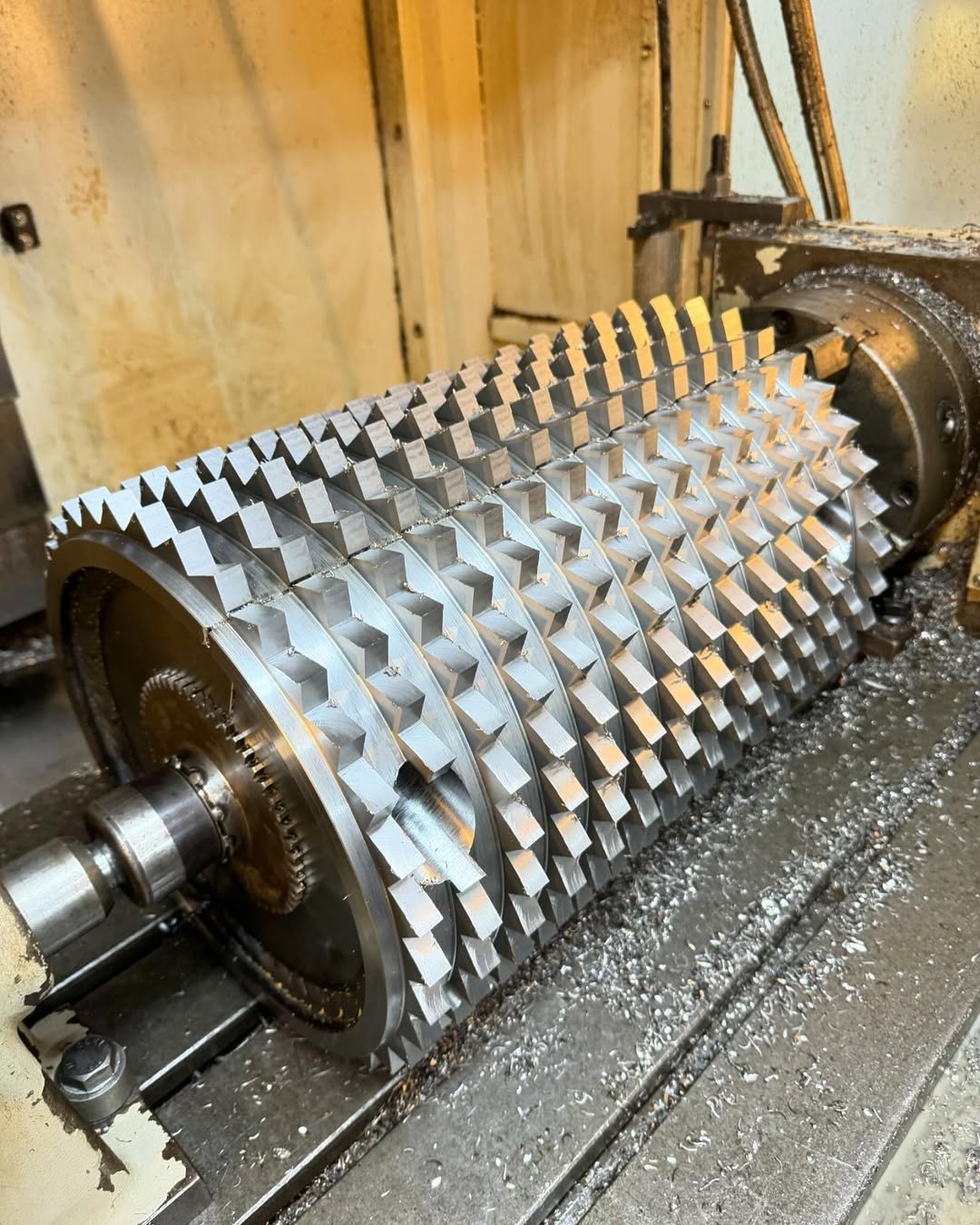
CNC machining (Computer Numerical Control machining) is a subtractive manufacturing process: a cutting tool removes material from a workpiece — metal billet, plate, bar stock, or casting — to produce a finished part to precise dimensions.
The CNC designation means the cutting path, speed, depth, and tool sequence are controlled by a digital program. This delivers the repeatability that manual machining cannot: the 500th part matches the 1st, and every dimension is held to the specified tolerance.
Core CNC machining operations:
- CNC turning — rotating the workpiece against a stationary cutting tool; used for shafts, bushings, pins, and cylindrical components
- CNC milling — rotating the cutting tool across a fixed workpiece; used for flat surfaces, slots, pockets, and complex 3D profiles
- CNC drilling and boring — producing precise holes and bored diameters to tight tolerances
- CNC grinding — abrasive finishing to achieve surface finish and dimensional precision beyond standard machining
- CNC gear hobbing and gear grinding — dedicated operations for producing external and internal gear teeth to specified module and tolerance class
Modern machining centers combine several of these operations in a single setup — reducing handling, improving concentricity, and shortening lead time.
👉 See our machining capabilities: Machining Services

What B2B Buyers Must Specify When Ordering CNC Machined Parts
Vague drawings produce vague parts. Machining suppliers work to the information they are given — gaps in the specification become decisions made on the shop floor, not in your engineering department. These are the parameters that must be defined before a machining order can be quoted accurately:
Geometry and tolerances:
- 2D drawings or 3D CAD files — DXF, DWG, STEP, or IGES formats accepted by most modern shops
- Critical dimensions with tolerances — ISO tolerance designations (H7, f6, etc.) or explicit ± values
- Geometric tolerances — flatness, cylindricity, perpendicularity, concentricity where relevant
- Surface finish (Ra) — the required roughness value on functional surfaces
Material:
- Steel grade — S235, S355, C45, 42CrMo4, 16MnCr5, stainless grades, or equivalent ASTM/DIN specification
- Heat treatment condition — normalized, hardened and tempered, case-hardened, or as-rolled
- Material certification requirement — EN 10204 3.1 or 3.2 mill certificate, material test report
Finishing and marking:
- Post-machining treatment — heat treatment, zinc plating, black oxide, phosphating, painting
- Part marking — engraved serial number, punch marks, or ink stamp for traceability
- Inspection requirements — dimensional report, CMM measurement, surface roughness check
Suppliers who ask these questions before quoting are the ones worth working with. Suppliers who quote without them are guessing.
Gear Manufacturing: A Higher-Stakes Subset of Machining
Gear manufacturing is a specialized branch of machining where the stakes are higher and the process chain is longer. A gear that fails in a gearbox, conveyor, or power transmission system typically takes surrounding components with it — and replacement in the field is costly and disruptive.
Gear types commonly produced for industrial applications:
- Spur gears — the most common type; straight teeth, parallel axis, used in gearboxes, conveyors, and general industrial machinery
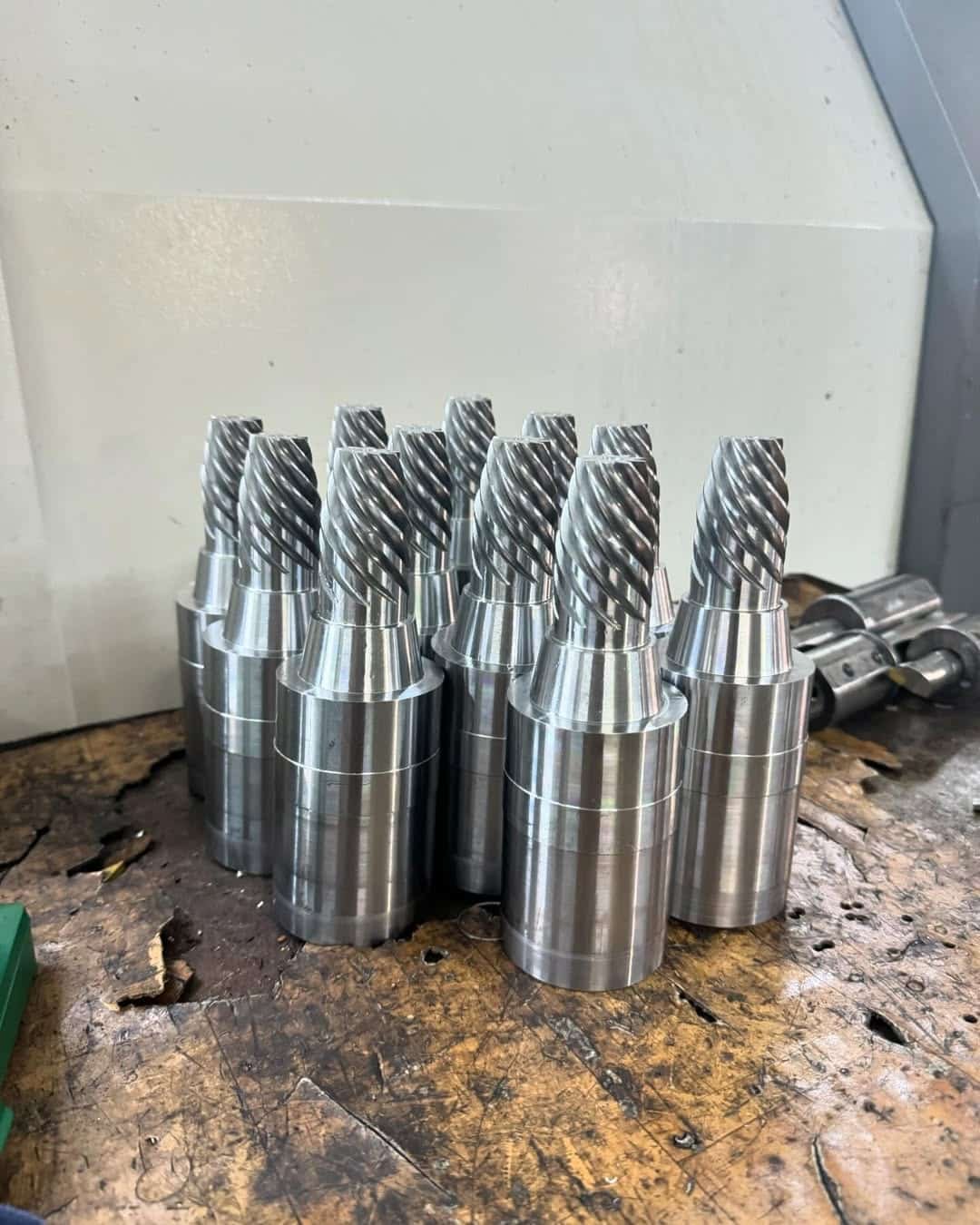
- Helical gears — angled teeth for smoother, quieter operation under higher loads; preferred in automotive and heavy equipment transmissions
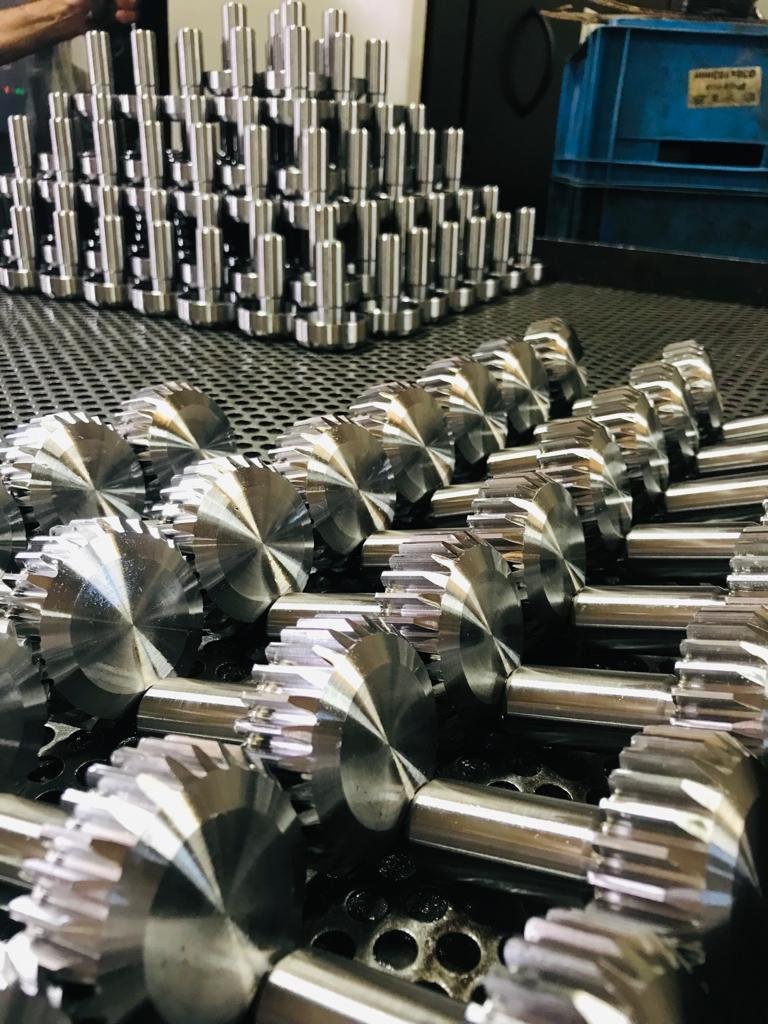
- Bevel gears — used to transmit motion between intersecting axes; common in differentials and right-angle drives
- Rack and pinion systems — linear motion conversion; widely used in CNC machine tools, actuators, and lifting systems
- Internal gears and ring gears — planetary gearbox components, slewing rings, and rotary drive applications
- Worm gears and worm wheels — high reduction ratios in compact space; common in material handling and packaging equipment
The gear production process — what happens before a gear leaves the factory:
- Blank preparation — turning the raw forging or bar to the gear blank dimensions
- Gear hobbing or gear shaping — cutting the tooth profile to the specified module and tooth count
- Heat treatment — case hardening, through hardening, or nitriding depending on load and wear requirements
- Gear grinding — post-hardening grinding to restore geometry and achieve the required quality grade (DIN 5, 6, 7, or 8)
- Final inspection — gear measurement on a CMM or gear measurement machine: tooth thickness, pitch, runout, lead, and profile deviations
👉 See our gear manufacturing capabilities: Gear Manufacturing Services
The Real Cost Drivers in CNC Machining — Beyond the Hourly Rate
B2B buyers often focus on the machining hourly rate when comparing suppliers. This is the least useful metric. The actual cost of a machined part is determined by factors that sit upstream and downstream of the cutting itself:
Setup time vs. run time ratio
For small batches, setup time — programming, fixturing, tool selection, first-article inspection — can represent 60–80% of total job time. An experienced machining team minimizes setup through smart fixturing and program reuse. A shop that charges full rate for every setup hour on a 5-piece order is not optimized for B2B supply.
Material procurement and traceability
Machined parts require specific steel grades, often in bar or plate form. A machining supplier who sources material from a verified steel supply chain — with mill certificates and heat numbers — adds documentation value that protects the buyer downstream. Suppliers who buy from unknown intermediaries create traceability gaps that can become quality disputes later.
Rework and scrap rate
A machining shop with a 3% scrap rate on complex parts is effectively adding 3% to every order — it just doesn’t appear on the invoice as a line item. Ask potential suppliers about their first-pass yield on similar parts before placing a volume order.
Heat treatment and surface finishing
Parts that require case hardening, nitriding, or galvanic coatings need either in-house capability or a vetted subcontractor. Each handoff is a lead time risk and a quality control point. Suppliers who manage these steps internally or through established partners deliver more predictable outcomes than those who outsource opportunistically.
Industries That Depend on Precision Machining and Gear Manufacturing
Demand for precision machined parts and custom gears spans virtually every capital-intensive industrial sector:
- Power transmission and gearbox manufacturing — shafts, gears, housings, bearing seats
- Agricultural machinery — PTO shafts, gear sets, sprockets, axle components
- Mining and quarrying equipment — crusher shafts, drive gears, wear-resistant machined components
- Cement and bulk material handling — kiln girth gears, pinions, conveyor drive components
- Marine and offshore — propeller shafts, deck machinery components, flanges and couplings
- Wind energy — main shafts, ring gears, planet carriers for nacelle gearboxes
- Steel and metallurgical plants — rolling mill rolls, pinch roll assemblies, coiler drive components
- Defense and aerospace — precision structural parts, high-tolerance assemblies requiring documented material traceability
In each of these industries, the machined or gear component is not a line item — it is a critical path item. Delivery delays or quality failures do not go unnoticed.
Why Turkey Has Become a Competitive Source for CNC Machining and Gear Manufacturing
Turkey’s position as a global manufacturing supplier has expanded well beyond raw steel and structural products. The country now hosts a significant base of precision machining and gear manufacturing capacity, operating modern CNC equipment and serving demanding European and Middle Eastern industrial buyers. The structural reasons are durable:
- Cost structure — machining labor and overhead costs in Turkey are substantially lower than in Germany, Italy, or France, while the machinery and process capability are comparable for most industrial part categories
- Steel supply integration — Turkey is one of the world’s largest steel producers; machining shops have direct access to bar stock, forgings, and plate in the grades required for precision parts — without the import lead times that affect suppliers in Asia
- Geographic proximity to Europe — road freight from western Turkey to Germany or France is 3–5 days; sea freight to southern European ports is comparably fast; this makes Turkey practical for repeat supply, not just project-by-project sourcing
- Engineering capability — Turkish machining and gear manufacturers increasingly employ experienced mechanical engineers capable of reviewing drawings, identifying manufacturability issues, and proposing alternatives — the kind of technical dialogue that reduces rework
- Export experience — established Turkish machining suppliers are fluent in export documentation: EUR.1 certificates, material test reports, packing lists in metric, and CE-relevant paperwork where applicable
How to Qualify a CNC Machining and Gear Manufacturing Supplier: The Questions That Matter
Precision machining is a field where a supplier can look credible on paper and still deliver out-of-spec parts consistently. These questions separate capable suppliers from credible-looking ones:
Technical capability:
- What is your turning capacity in maximum diameter and length? (Relevant for large shafts and rings)
- What is the largest gear module and outer diameter you can hob and grind?
- Do you have in-house gear measurement capability, or do you subcontract inspection?
- What DIN gear quality grades can you certifiably produce?
- Do you have 4- or 5-axis machining capability for complex geometries?
Quality and documentation:
- Do you supply EN 10204 3.1 mill certificates as standard?
- Do you produce dimensional inspection reports for each order, or only on request?
- How is material traceability maintained from incoming stock to finished part?
- What is your process for handling non-conformances — internal detection vs. customer complaints?
Commercial and logistics:
- What is a realistic lead time for first articles on a new part number?
- How do you handle urgent re-orders when a part fails in service?
- Do you have experience with export documentation for European buyers?
- What is your policy on retained tooling and programs for repeat orders?
What Steeling.net Supplies in CNC Machining and Gear Manufacturing
At Steeling.net, we work with select Turkish manufacturing partners who specialize in precision CNC machining and gear manufacturing for industrial export clients. Our supply covers:
- CNC turning and milling — shafts, flanges, bushings, housings, and custom rotational and prismatic parts
- CNC gear hobbing and gear grinding — spur gears, helical gears, bevel gears, rack and pinion, and worm gear sets
- Heat treatment — case hardening, through hardening, and nitriding through partner facilities
- Dimensional inspection and reporting — CMM measurement, gear quality certificates, dimensional inspection sheets per order
- Material supply and certification — raw material sourced from verified steel suppliers, EN 10204 3.1 mill certificates included as standard
- Export packaging and documentation — parts packed for international transit, full export documentation provided
We handle projects ranging from single prototype parts to recurring production supply for industrial OEMs. If you have a drawing, a worn part to reverse-engineer, or a parts list requiring ongoing replenishment — we can build a supply proposal around it.
Request a Quote for Your Machining or Gear Manufacturing Project
Share your technical drawings, material specifications, or a description of your requirements. We will review the feasibility with our manufacturing partners and respond with a detailed supply proposal.
👉 Send us your enquiry
👉 CNC Machining Services
👉 Gear Manufacturing Services
Summary: Key Points for Technical Buyers
- CNC machining and gear manufacturing require a complete, unambiguous specification — tolerances, material grade, heat treatment condition, and surface finish must be defined before quoting
- The real cost of machined parts is driven by setup efficiency, material traceability, scrap rate, and process integration — not hourly rate alone
- Turkey offers a durable cost advantage in precision machining: modern equipment, integrated steel supply, geographic proximity to Europe, and established export capability
- Steeling.net supplies CNC machined parts and custom gears through select Turkish manufacturing partners, with full documentation and export support for international B2B buyers