


Laser Cutting and CNC Bending Services: What B2B Buyers Need to Know Before Sourcing
For procurement teams and project engineers, laser cutting and CNC bending are two of the most critical fabrication steps in metal part production. Yet they are often sourced from separate suppliers — creating coordination delays, tolerance mismatches, and hidden costs that erode the value of even the best material price.
This guide covers what B2B buyers in Europe, the Middle East, and international markets should evaluate when selecting a laser cutting and bending supplier — and why combining these services under one roof changes the economics of the entire project.
What Is Laser Cutting? A Quick Technical Overview for Buyers
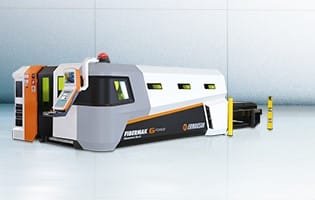
Laser cutting is a thermal cutting process that uses a focused laser beam to cut metal sheets and plates with high precision. It is the dominant method for cutting carbon steel, stainless steel, and aluminum in modern metal fabrication.
Key technical parameters buyers should specify:
- Material type — carbon steel, stainless steel, galvanized, aluminum
- Sheet thickness — fiber laser cutting is effective from 0.5 mm up to 70 mm in carbon steel
- Cutting tolerance — typically ±0.1 mm to ±0.5 mm depending on thickness and material
- Edge quality requirements — straight, dross-free edges for welding or post-processing
- Part geometry — simple blanks vs. complex profiles with holes, notches, and slots
- Volume and batch size — one-off prototypes vs. serial production runs
Modern high-power fiber lasers (6 kW–30 kW range) have largely replaced CO₂ lasers for steel cutting. They cut faster, consume less gas, and produce cleaner edges — all of which translate into better pricing and faster delivery for buyers.
👉 See our laser cutting capabilities: Laser Cutting Services
What Is CNC Bending? How Precision Bending Works in Practice
CNC bending (also called press brake bending) forms laser-cut blanks into three-dimensional parts by pressing them between a punch and die. The “CNC” designation means the machine is controlled by a computer program that precisely controls bend angle, depth, and sequence.
For B2B buyers, the practical implications are:
- Repeatability — CNC control ensures the 50th part matches the 1st part exactly
- Complex geometry — multiple bends, varying angles, and narrow flanges are achievable
- Thickness range — typically 0.5 mm to 30+ mm depending on machine tonnage
- Bend angle accuracy — modern press brakes hold ±0.5° or better
- Material springback compensation — CNC systems calculate material behavior to deliver accurate final angles
👉 See our bending capabilities: CNC Bending Services
The Real Cost of Splitting Laser Cutting and Bending Between Two Suppliers
Many buyers send cutting and bending to different vendors — one optimizes for cutting, one for bending. On paper this seems efficient. In practice, it creates three recurring problems:
1. Tolerance stack-up between processes
When the bending supplier receives laser-cut parts from a third party, they inherit any dimensional deviation from the cutting stage. If the cut part is 0.3 mm off, the bent part will be off too — and no amount of CNC precision on the press brake can fix an inaccurate incoming blank.
2. Logistics and lead time overhead
Moving cut parts between facilities adds transport time, handling risk, and at least one extra scheduling cycle. For international projects, this can add 1–2 weeks to delivery — before the bending has even started.
3. Accountability gaps on quality issues
When a bent part fails inspection, the cutting supplier says the issue is in the bending, and the bending supplier points back at the cut blank. A single-source supplier eliminates this dynamic: one team is accountable from raw material to finished part.
Industries That Rely on Laser Cutting and CNC Bending
Combined laser cutting and bending services are used across a wide range of B2B sectors:
- Industrial machinery and equipment — enclosures, frames, brackets, housings
- Construction and structural steel — cleats, gussets, connection plates, purlins
- Energy and power generation — switchgear panels, cable trays, transformer housings
- Agriculture and material handling — conveyor components, auger parts, bin liners
- HVAC and ventilation systems — ducts, flanges, diffuser bodies
- Automotive and transport — structural sub-assemblies, custom brackets, reinforcement plates
- Storage and racking systems — uprights, beams, shelf pans
In each of these sectors, the combination of cut accuracy + bend precision determines whether the final part fits and functions as designed — or generates costly rework.
Sourcing Laser Cutting and Bending from Turkey: What the Numbers Mean for European Buyers
Turkey has become one of Europe’s primary suppliers for precision sheet metal fabrication. The reasons are structural, not temporary:
- Lower production cost — energy, labor, and overhead costs in Turkey are significantly lower than in Western Europe, typically delivering 25–45% cost savings on comparable fabrication work
- Modern equipment — Turkish fabricators investing in high-power fiber lasers and CNC press brakes now operate machinery equivalent to European counterparts
- Geographic proximity — Turkey’s position on the European border keeps freight costs and transit times competitive, especially for road and sea freight to Southern and Eastern Europe
- Steel supply chain integration — Turkey is one of the world’s top steel producers, giving local fabricators direct access to raw material without the import lead time that affects suppliers in other low-cost regions
- Standards alignment — Turkish fabricators working with European clients routinely supply EN and ISO compliant documentation, including mill certificates and material test reports
For procurement teams in Germany, the Netherlands, Belgium, France, and Scandinavia, Turkish laser cutting and bending suppliers have moved from “alternative” to strategic supply base in many categories.
What to Ask a Laser Cutting and Bending Supplier Before Placing an Order
Not all fabricators operate at the same level. Before placing a significant order, these questions filter out suppliers who cannot deliver consistently:
On technical capability:
- What is your maximum laser cutting thickness in carbon steel and stainless steel?
- What laser power do you operate (kW)? Higher power means faster cutting on thick material.
- What is your press brake maximum tonnage and bending length?
- Can you handle multi-bend sequences on the same part in a single setup?
On quality and documentation:
- Do you supply material certificates and test reports with each order?
- What inspection process is applied before parts are released?
- What quality standards do your manufacturing partners hold?
On delivery and commercial terms:
- What is a realistic lead time for a first order, including material sourcing?
- Do you handle export documentation (packing lists, CMR, EUR.1)?
- Can you accommodate partial shipments on larger orders?
- What is the minimum order value or quantity?
A supplier who answers these questions clearly — without evasion — is more likely to perform consistently across multiple orders.
How Steeling.net Handles Laser Cutting and CNC Bending Projects
At Steeling.net, we represent select Turkish manufacturing partners who operate integrated laser cutting and CNC bending facilities. This means the same production site handles both processes — no inter-supplier handoffs, no tolerance mismatches, no split accountability.
What we supply:
- Laser cutting — carbon steel, stainless steel, and aluminum, up to 70 mm thickness
- CNC bending — single and multi-bend sequences, complex profiles, tight-tolerance flanges
- Integrated fabrication — cutting + bending + secondary operations in one production flow
- Material supply — we source the raw sheet material through our steel supply network, removing one more coordination step for the buyer
- Full documentation — mill certificates, material test reports, packing lists, and export paperwork
- Flexible volumes — from small prototype batches to recurring production runs
We work with industrial buyers, engineering firms, and procurement teams across Europe, the Middle East, and North Africa who need reliable fabrication at competitive cost — with the documentation and communication standards expected in international B2B sourcing.
Request a Quote for Your Laser Cutting and Bending Project
If you have a project that requires laser-cut and bent parts in carbon steel, stainless steel, or aluminum — we can prepare a supply proposal tailored to your specifications.
Share your drawings, material list, or a brief description of your requirements, and we will respond with a detailed offer.
👉 Send us your enquiry
👉 Laser Cutting Services
👉 CNC Bending Services
Summary: Key Points for B2B Buyers
- Laser cutting and CNC bending work best when handled by the same supplier — it eliminates tolerance transfer, logistics delay, and accountability gaps
- Turkey is a structurally competitive source for precision fabrication: lower cost, modern equipment, geographic proximity to Europe, and integrated steel supply
- Before placing an order, qualify suppliers on machine capability, quality documentation, and export process — not just price
- Steeling.net supplies integrated laser cutting and CNC bending through select Turkish manufacturing partners, with full material documentation and export support